Sessions currently planned
2026 Planning

01
Resilient by design: nextgen global supply chains
Global food and agriculture supply chains are being reshaped as companies respond to shifting trade policies, increased geopolitical risk, logistics disruptions and climate‑driven events, as well as demand volatility, and inflationary pressures on inputs and materials. This session will explore emerging strategies for building resilient food and agriculture supply chains, including digitization and AI, diversification and nearshoring, inventory buffering, and the use of more systematic risk‑management and ESG frameworks across global value chains. The discussion will also consider who is shaping these future supply chains—from food companies and retailers to governments, farmer cooperatives, large producers, and non‑profits—and how their roles and incentives may converge or collide.
02
The humanless farm
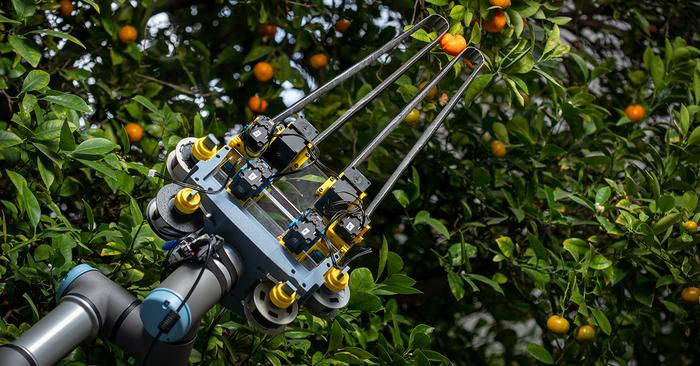
This session will explore the future of specialty crop farming through the thought experiment of a 'humanless farm' run entirely by robotics and AI—until the farm itself decides it needs some humans back. Participants will work from this extreme scenario to examine how automation, rising labor costs, and intelligent machines could transform tasks from chemistry and harvesting to monitoring, logistics, and on‑farm decision‑making. Building on interactive exercises, the session will reveal where humans remain indispensable in specialty crop systems—whether for judgment, creativity, stewardship, relationships and trust, or navigating regulation and markets—and what hybrid models of human–AI collaboration could look like in practice. The goal is not to design a fully automated future, but to use this provocative frame to shift how we think about the role of AI and automation in agriculture—clarifying which human roles we most want to preserve and strengthen as robotics and AI reshape farming from the ground up.

03
Re-thinking agriculture-led economic development in a fractured world
Agriculture has long been humanity's most reliable engine of economic development in low-income countries, driving economic growth and large-scale poverty reduction. But that world is fracturing, with changes in foreign aid, global trade, industrial policy, climate governance. This panel will explore how companies, development finance institutions, governments and philanthropies are redefining their roles in a new multipolar reality, providing insights into the priorities, partnerships, and financing models that are needed to succeed in the decades to come.
04
Food Prices and the Affordability of a Healthy Diet
Food prices have been under pressure in many parts of the world, making it more difficult for families to afford a healthy diet. Rising fuel and fertilizer prices are increasing costs for input suppliers, farmers, processors, and distributors along the value chain from field to fork, and are likely to keep food prices elevated. This discussion will present the latest global data on the affordability of a healthy diet and food inflation, examine where these pressures are projected to hit hardest, unpack what is really driving these trends and explore solutions.

05
Managing Forever Chemicals and Microplastics in Agri-Food Systems
PFAS and microplastics are emerging as potentially some of the most consequential contaminants in the agri-food sector. Science, policy, and practice are striving to address the scale of this challenge. This session brings together regulators, agribusiness leaders, health scientists, and consumer advocates to examine what is known—and remains uncertain—about how PFAS and microplastics move through soils, crops, livestock, and packaging, and their implications for food safety, trade, and farmer livelihoods. Panelists will explore rapidly evolving regulations in the EU, US, and Asia-Pacific; the scientific and public health debates surrounding exposure risks; and market responses shaping "clean label" and sourcing expectations.
06
Sustainability under pressure
The sustainability agenda in food and agriculture is being tested from multiple directions at once. European supply chain due diligence legislation, deforestation regulations, and carbon border mechanisms are rewriting the rules of trade and sourcing. In the US and elsewhere, political headwinds are reshaping what companies can say and how they invest. At the same time, emerging technologies are opening new possibilities for what sustainable agriculture can actually look like in practice. This session brings together senior leaders in sustainability, policy, and agtech to ground-truth where the agenda stands today across the EU, US, Brazil, and beyond.
The team
PAPSAC is a collaboration
The conference is a collaboration between the not-for-profit foundation established to further Ray Goldberg's legacy and Harvard University's Kennedy School of Government. Wolfram Schlenker, the Ray A. Goldberg Professor of the Global Food System at Harvard leads the facilitation.
A small team produces the conference every year. For 2026, the team includes: Sara Boettiger, Edmund O'Keeffe, Nora O'Neil, Caroline DeWaal and Yoav Levsky.
Curated content and participation are always changing. Please reach out with ideas.


